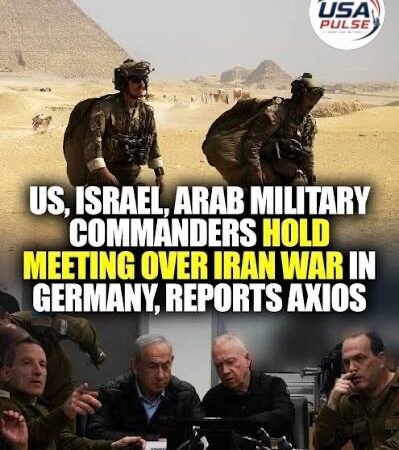
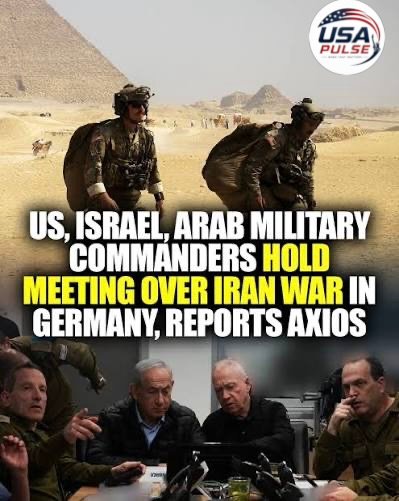
Senior military commanders from the United States, Israel and eight Arab countries reportedly gathered for a secret meeting in Germany as tensions with Iran continue to reshape security across the Middle East.
According to Axios, the meeting was organized by U.S. Central Command chief Adm. Brad Cooper and brought together some of the region’s most senior military officials.
Who Was Reportedly at the Meeting?
Axios reported that military chiefs or senior commanders representing the United States and Israel were joined by officials from:
Saudi Arabia, the United Arab Emirates, Bahrain, Kuwait, Qatar, Jordan and Egypt, among others.
The governments involved did not publicly announce the gathering.
Iran Conflict at the Center
The reported meeting comes at a critical moment in the Middle East.
The United States remains engaged in its conflict with Iran, while Iran-aligned Houthi forces in Yemen have intensified attacks against Saudi Arabia and disrupted important shipping routes.
The Strait of Hormuz and Bab el-Mandeb have both become major concerns for global trade and energy markets.
Against that backdrop, cooperation between U.S., Israeli and Arab military officials has become increasingly important for air defense, intelligence sharing and regional security.
Why the Meeting Matters
A gathering involving senior commanders from countries that have historically had complicated relationships would underline the extent to which the Iran conflict is changing regional security calculations.
Several Arab governments have sought to avoid being pulled deeper into the war while simultaneously facing missile, drone and maritime threats connected to the broader conflict.
The reported meeting does not by itself indicate that the participating countries agreed to new military action against Iran.
However, bringing senior military leaders together behind closed doors highlights the level of concern surrounding the expanding conflict.
With attacks continuing, oil prices elevated and key shipping routes under pressure, Washington and its regional partners are facing difficult decisions over how to prevent another major escalation.