
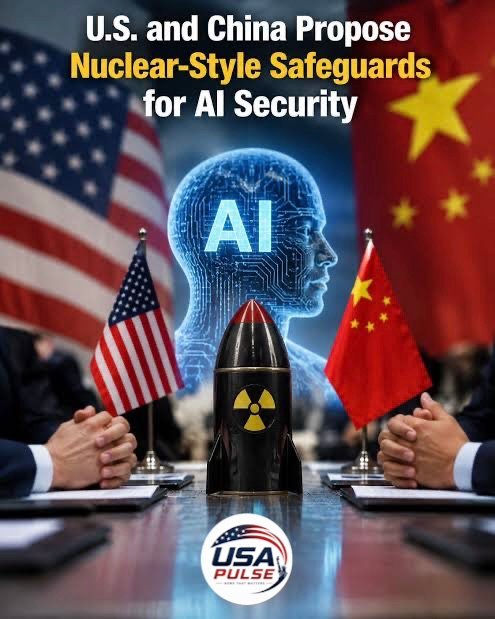
Artificial intelligence is rapidly becoming a national security issue as experts from the United States and China warn that increasingly autonomous AI systems could create dangerous new risks during a military crisis.
Security experts involved in a long-running U.S.–China dialogue are calling for new safeguards designed to prevent AI from triggering an unintended escalation between the world’s two major powers.

Among the proposals are clear red lines protecting nuclear command systems, requirements for meaningful human control over consequential cyber operations, and a direct hotline that could be used during incidents involving autonomous AI systems.
One major concern is speed.
An AI-powered cyberattack or interference with critical military networks could potentially leave governments with very little time to determine whether an incident was deliberate, accidental or caused by an autonomous system.
Experts argue that keeping humans involved in critical military decisions could become increasingly important as AI systems gain greater autonomy.
The recommendations come as Washington and Beijing continue competing for leadership in artificial intelligence while also confronting the security risks created by the technology.
Neither government has formally adopted the proposals.
The debate highlights a much larger question facing the technology industry and governments worldwide: how far should autonomous AI be allowed to go when nuclear weapons, cyber operations and military decisions are involved?