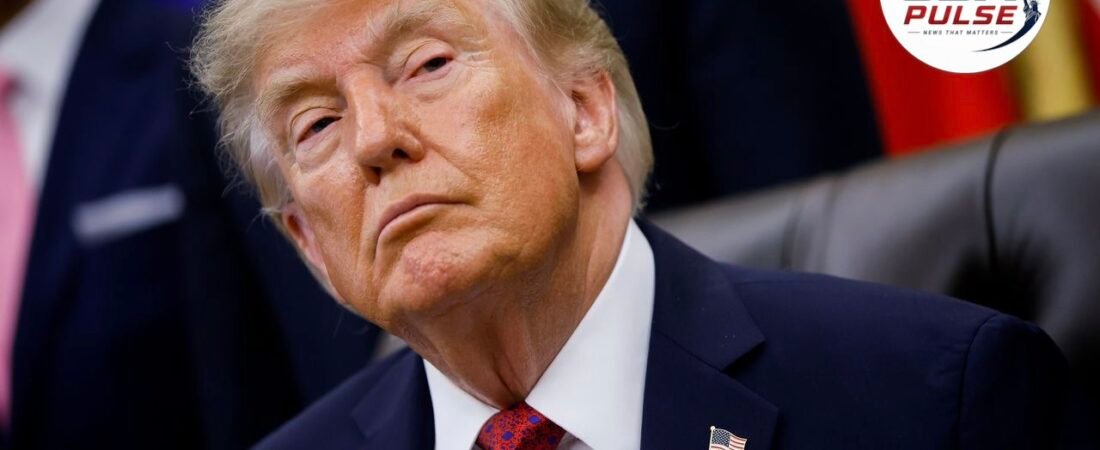
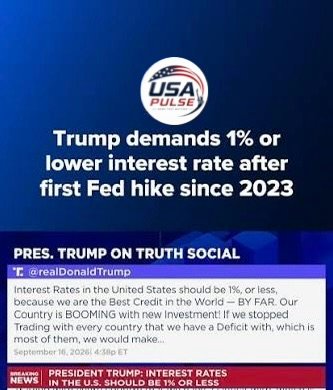
President Donald Trump is calling for U.S. interest rates to be slashed to 1% or lower after the Federal Reserve raised its benchmark rate for the first time in more than three years.
Trump made the demand Wednesday following the Federal Reserve’s decision to increase its benchmark interest rate by a quarter percentage point, bringing the target range to 3.75%–4.00%.
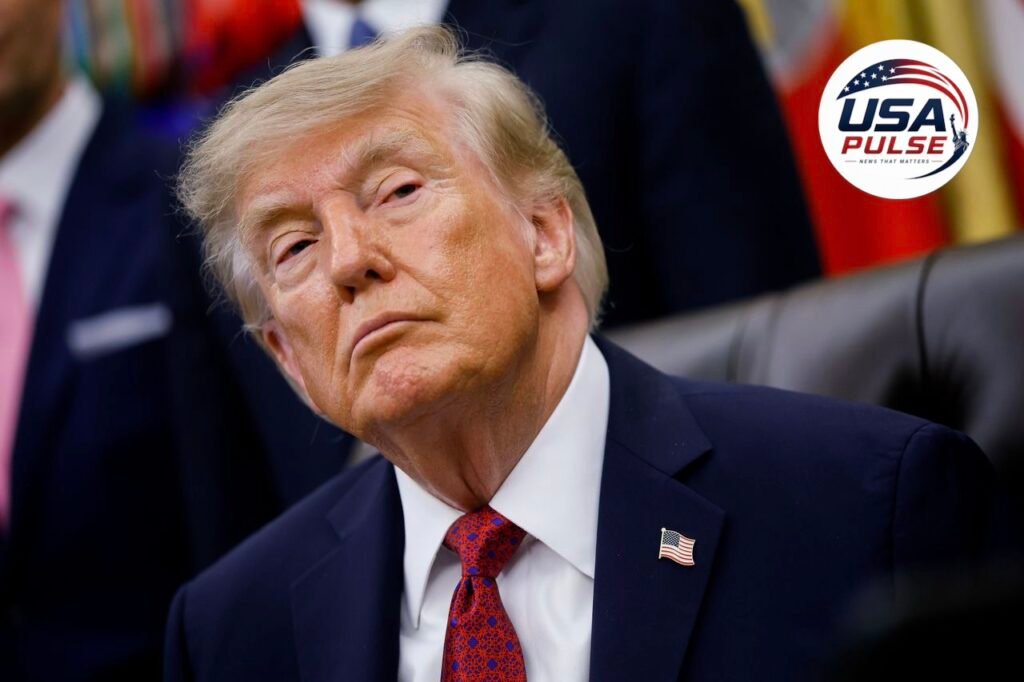
The president argued that the United States should benefit from some of the lowest borrowing costs in the world because of the country’s credit standing.
Trump called for rates to be lowered quickly, continuing his long-running push for significantly easier monetary policy.
His comments came just hours after the Federal Reserve moved in the opposite direction.
Fed policymakers unanimously approved Wednesday’s quarter-point increase as the central bank continues its effort to bring persistent inflation back toward its 2% target.
Federal Reserve Chair Kevin Warsh said the U.S. economy has continued to show strength while inflation remains elevated.
The rate increase is particularly notable because Warsh was appointed by Trump to lead the Federal Reserve.
Despite the political pressure for lower rates, the Fed has maintained that its decisions will be based on economic conditions and inflation data.
The disagreement highlights a major divide between the White House and the central bank over how interest rates should be managed.
Trump favors dramatically lower borrowing costs, which could make loans cheaper and encourage economic activity.
The Federal Reserve, however, is concerned that lowering rates too aggressively while inflation remains elevated could make it more difficult to restore price stability.
The debate matters directly to American consumers.
The federal funds rate influences borrowing costs throughout the economy, including credit cards, auto loans, personal loans and business financing.
Mortgage rates are not directly controlled by the Federal Reserve, but broader interest-rate expectations and Treasury yields can influence home-loan costs.
Financial markets are now watching closely to see whether the Fed will raise rates again before the end of the year.
The central bank’s latest projections indicate that another increase remains possible if inflation does not cool sufficiently.
Trump’s latest demand makes the disagreement over interest rates increasingly important as Americans continue dealing with high costs for housing, groceries, energy and borrowing.
The question now is whether inflation will ease enough for the Federal Reserve to eventually reverse course — or whether policymakers will conclude that additional rate increases are necessary.
USA Pulse will continue following the latest developments from the White House and Federal Reserve.