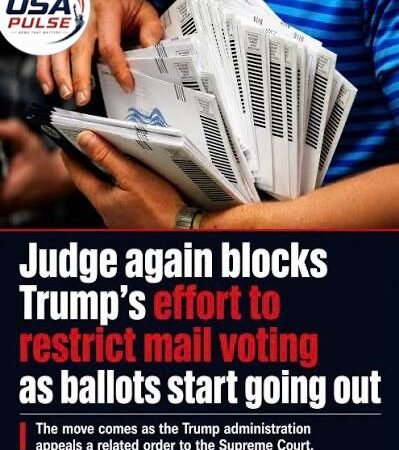
A second federal judge has temporarily blocked President Donald Trump’s effort to impose new restrictions on mail-in voting, adding another major legal obstacle ahead of the 2026 midterm elections.
U.S. District Judge Carl J. Nichols in Washington, D.C., issued a preliminary injunction preventing the U.S. Postal Service from implementing new mail-ballot regulations connected to Trump’s executive order.
The decision comes as the U.S. Supreme Court is already considering a separate challenge involving the same policy.
What Would the New Rules Change?
The Postal Service regulations would require states to meet new requirements before mail ballots are processed under the system.
Among the changes, ballot-envelope designs would need to receive advance approval from the Postal Service. States would also be required to upload information identifying voters receiving ballots to an online portal.
However, the portal has not yet become operational, while election officials have warned that implementing the changes so close to the midterm elections could create serious logistical problems.
Mail ballots are already being distributed in Alabama, North Carolina and Wisconsin, with additional states preparing to begin sending ballots.
Judge Warns Valid Ballots Could Go Uncounted
Judge Nichols concluded that allowing the regulations to take effect could increase the risk that otherwise valid absentee or mail-in ballots would not be counted.
The ruling is especially notable because Nichols was nominated to the federal bench by Trump.
Another federal judge, Indira Talwani in Boston, previously issued a similar injunction preventing the Postal Service from enforcing the rule. The Trump administration is challenging that decision, and the dispute has now reached the Supreme Court.
Major Election Battle Ahead
The legal fight comes at a critical moment as the United States prepares for the 2026 midterm elections.
Election officials and opponents of the policy argue that introducing major changes to mail voting shortly before ballots are distributed could create confusion and potentially prevent eligible voters from having their ballots counted.
The administration, meanwhile, has continued pushing for changes to election procedures, particularly surrounding mail-in voting.
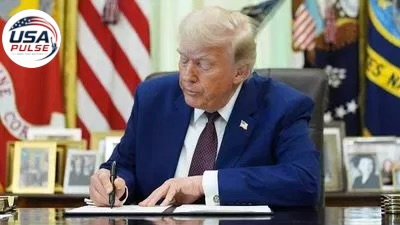
With two federal judges now blocking implementation and the Supreme Court considering the issue, the dispute could become one of the most important election-law battles ahead of the November midterms.
The Supreme Court’s next move could determine whether the new restrictions can take effect before millions of Americans cast their ballots.