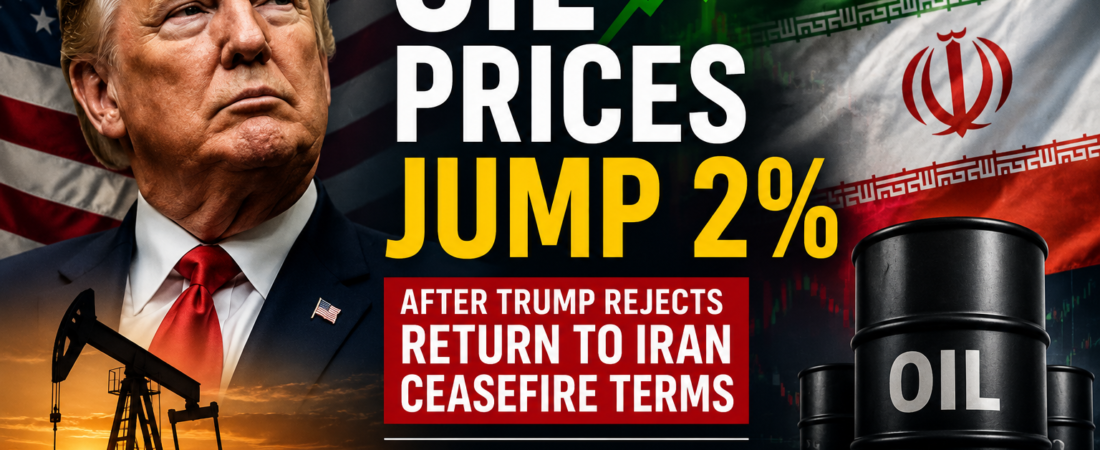
Oil prices climbed sharply Thursday after President Donald Trump rejected a return to previous ceasefire terms with Iran, adding fresh uncertainty over the conflict and global energy supplies.
Brent crude settled at $89.70 per barrel, up 2.1%, while U.S. West Texas Intermediate (WTI) crude rose 1.6% to $83.53 per barrel, according to Reuters.
Trump Rejects Return to Previous Terms
Trump said the United States is not currently negotiating with Iran and rejected returning to the terms of the previous U.S.–Iran memorandum.
The comments reduced expectations that Washington and Tehran could quickly reach a diplomatic breakthrough, putting renewed attention on the risks surrounding Middle Eastern energy supplies.
Oil Markets React
Oil traders have been closely watching developments involving Iran and the Strait of Hormuz, one of the world’s most important routes for crude oil and liquefied natural gas shipments.
Any prolonged disruption to shipping through the region could tighten global supplies and increase transportation and insurance costs.
Thursday’s price increase shows how quickly geopolitical developments involving Iran can affect global energy markets.
What It Could Mean for Americans
Higher crude prices do not automatically translate into an identical increase at U.S. gas stations, but sustained increases in oil prices can eventually put upward pressure on gasoline, transportation and other energy-related costs.
For American consumers and businesses, the direction of oil prices will therefore depend heavily on whether tensions escalate further or diplomatic efforts regain momentum.
What Comes Next?
Regional governments continue trying to find a diplomatic path forward, but significant differences remain between Washington and Tehran.
Energy markets will be watching the next developments closely, particularly anything affecting shipping through the Strait of Hormuz.
USA Pulse will continue monitoring the U.S.–Iran conflict and its impact on oil prices and the American economy.
Sources: Reuters reporting on oil markets and U.S.–Iran developments.