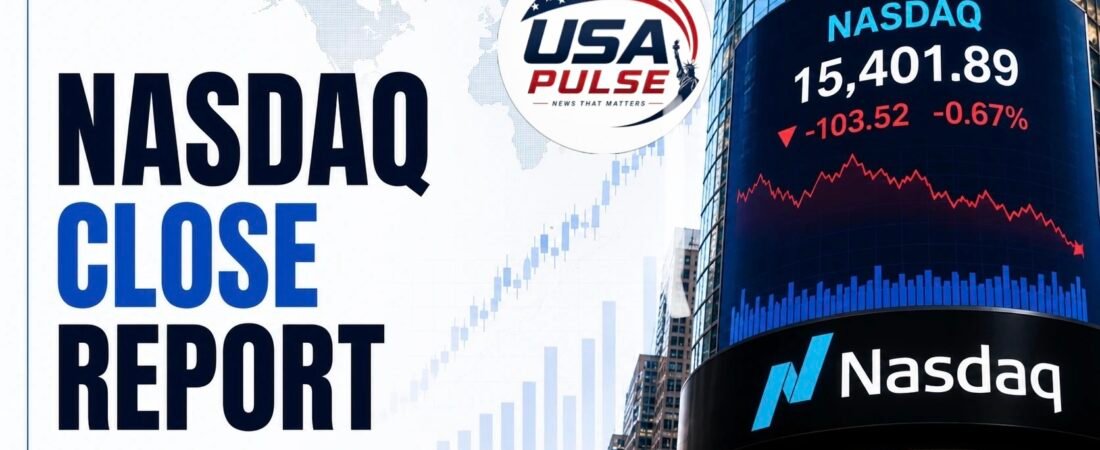
Wall Street reached another major milestone Tuesday as the tech-heavy Nasdaq Composite climbed to a fresh record, powered by renewed enthusiasm surrounding artificial intelligence and technology stocks.

At the same time, oil prices dropped to two-week lows, with Brent crude falling below $100 per barrel during trading as investors watched signs of improving Middle East supply conditions.
The combination of stronger technology stocks and easing oil prices gave investors fresh reasons for optimism — although geopolitical tensions and high interest rates remain major risks.
Nasdaq Reaches a New Record
The Nasdaq Composite climbed as high as 27,231.59 on Tuesday, reaching a new intraday record.
Technology and AI-related companies helped drive the gains as investors continued betting that massive spending on artificial intelligence infrastructure could support future growth.
The rally follows Monday’s strong performance, when the Nasdaq closed at a record high.
Chipmakers have been among the biggest beneficiaries of renewed AI enthusiasm.
AI Stocks Return to the Spotlight
Artificial intelligence has once again become one of the biggest forces driving Wall Street.
Investors are closely watching spending on AI chips, data centers, cloud infrastructure and new consumer AI products.
The latest rally follows strong gains across several semiconductor companies.
AMD reached a $1 trillion market capitalization for the first time during Monday’s rally, while Intel and Arm Holdings also recorded major gains.
The moves show how strongly expectations surrounding AI investment continue to influence the U.S. stock market.
Oil Drops Below $100
Technology wasn’t the only major story moving markets.
Oil prices declined as investors reacted to signs that Middle East energy supplies could improve.
Reuters reported U.S. crude around $95.33 per barrel and Brent around $99.92 during Tuesday trading.
Brent had previously climbed sharply because of disruptions associated with the conflict involving Iran and the strategically important Strait of Hormuz.
Lower oil prices could eventually ease some pressure on transportation costs and inflation, although energy markets remain highly volatile.
Middle East Diplomacy Is Moving Markets
Investors are also closely watching diplomatic developments involving the United States and Iran.
Any progress that reduces the risk of prolonged disruption to Middle Eastern oil supplies could have major consequences for global energy prices.
The Strait of Hormuz remains particularly important because it is a critical route for global oil and liquefied natural gas shipments.
Even small changes in expectations surrounding the conflict can therefore move oil prices quickly.
Trump-Xi Meeting Also in Focus
Markets are simultaneously watching upcoming discussions between President Donald Trump and Chinese President Xi Jinping.
Trade, technology, artificial intelligence and geopolitical tensions are expected to remain important issues surrounding U.S.–China relations.
Investors will be watching for signs that Washington and Beijing can maintain their trade truce and avoid new economic disruptions.
What This Could Mean for Americans
The movements on Wall Street and in the oil market can eventually affect everyday Americans.
A strong stock market can benefit retirement and investment accounts, while lower oil prices can reduce pressure on gasoline and transportation costs if declines persist.
But neither trend is guaranteed to continue.
Oil markets remain exposed to geopolitical developments, while technology stocks can move sharply when expectations surrounding AI growth change.
What Comes Next?
Wall Street will now be watching three major forces: artificial intelligence investment, Middle East developments and U.S.–China relations.
For now, AI optimism has helped push the Nasdaq to record territory while easing oil prices have provided some relief after weeks of energy-market uncertainty.
Whether those trends continue will depend heavily on economic data, corporate earnings and the next developments in global diplomacy.