American consumers opened their wallets again in August, delivering a stronger-than-expected boost to U.S. retail sales despite persistent inflation and higher fuel prices.
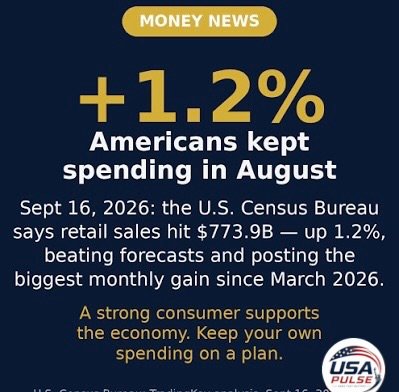
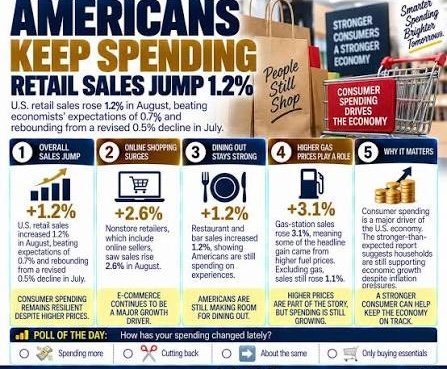
Retail sales increased 1.2% in August, according to Commerce Department data, rebounding from a revised 0.5% decline in July.
The increase exceeded economists’ expectations and provided another sign that consumer spending remains resilient despite growing pressure on household budgets.
Americans Are Still Spending
Retail sales excluding gasoline stations increased 1.1%, showing that the rebound was not driven only by higher fuel prices.
Spending improved across several categories, including online shopping, electronics, restaurants and recreation.
The closely watched “control group” of retail sales — used in calculations of economic growth — increased a strong 1.4% from the previous month.
Gas Prices Add Pressure
Higher gasoline prices also contributed to the overall increase in retail spending.
Gas station receipts rose as fuel prices climbed, meaning part of the headline retail-sales gain reflected consumers paying more at the pump rather than simply purchasing more goods.
That distinction matters because retail-sales figures are not adjusted for inflation.
Strong Consumers, But Inflation Remains a Problem
The numbers show that U.S. consumers continue to support economic activity even as concerns about the cost of living persist.
However, economists are watching whether households can maintain this level of spending as higher fuel costs, inflation and borrowing costs put additional pressure on family budgets.
Lower-income households may be particularly vulnerable if prices remain elevated.
What Does It Mean for the U.S. Economy?
Strong consumer spending can support economic growth because household consumption represents a major part of U.S. economic activity.
But stronger demand can also complicate the Federal Reserve’s efforts to bring inflation under control.
The latest retail figures therefore provide two competing signals: consumers remain resilient, but continued spending could make the inflation fight more difficult.
The big question now is whether Americans can keep spending at this pace through the final months of 2026.