The war with Iran has already cost the Pentagon tens of billions of dollars while putting pressure on critical U.S. weapons stockpiles, according to a new government watchdog report offering one of the most detailed official assessments of the conflict so far.
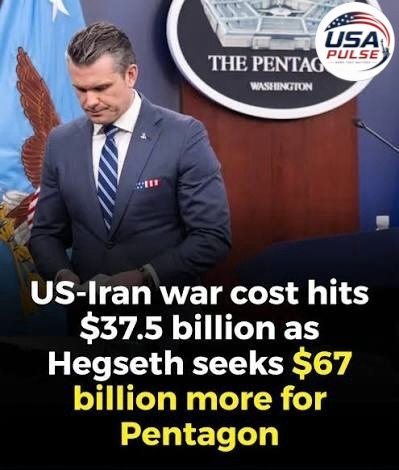
Defense Secretary Pete Hegseth told Congress in late July that the war had cost the Pentagon approximately $37.5 billion.
But the financial cost is only part of the growing impact.
The Pentagon inspector general’s report found that the conflict has created strategic shortages in advanced weapons inventories and exposed bottlenecks in America’s ability to rapidly replace sophisticated munitions.
Experts have previously estimated that rebuilding stocks of some advanced missiles and defensive interceptors to prewar levels could take roughly three years.
The report also provides new details about damage to U.S. military infrastructure across the Middle East.
Iranian strikes damaged or destroyed hundreds of buildings and other structures at American bases in countries including Kuwait, Bahrain, Qatar, the United Arab Emirates, Saudi Arabia, Iraq, Oman and Jordan.
Dozens of U.S. aircraft and drones were also damaged or destroyed during the conflict.
American diplomatic facilities have faced significant damage as well. According to the watchdog report, facilities in Iraq, Kuwait, Saudi Arabia and the United Arab Emirates suffered an estimated $184 million in physical damage.
The State Department reported approximately $113 million in conflict-related costs by early June, including nearly $80 million connected to contingency operations and evacuations.
Around 9,000 U.S. citizens were evacuated during the crisis, with many leaving Israel as fighting spread across the region.
The report comes as questions grow over how long the United States can sustain a high-intensity military campaign while maintaining enough advanced weapons for other potential conflicts around the world.
The impact is also being felt beyond the battlefield.
Continued instability in the Middle East has disrupted global energy markets, with oil prices again moving above $100 per barrel in recent days. Higher energy and transportation costs could eventually add more pressure to American household budgets.
Despite months of fighting, the conflict remains unresolved, and there is still uncertainty over how and when it could end.
For Washington, the new watchdog findings highlight a growing challenge: the Iran conflict is not only costing billions of taxpayer dollars but is also testing America’s military stockpiles, industrial capacity and regional infrastructure.
USA Pulse will continue following the latest developments and their impact on the United States.