President Donald Trump said Tuesday that the United States and Iran are continuing talks, offering a potentially significant diplomatic signal after months of conflict and escalating tensions in the Middle East.
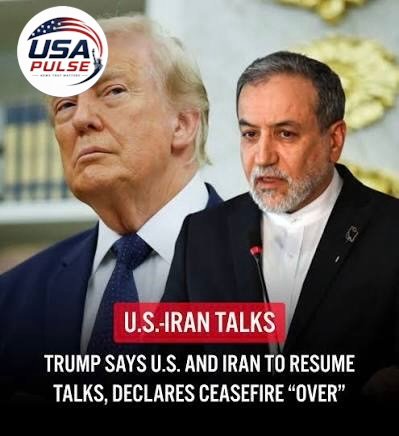
Speaking on the sidelines of the United Nations General Assembly in New York, Trump said U.S. and Iranian officials had been communicating Tuesday and expressed confidence that the two sides could eventually reach a settlement.
The comments came just hours after Trump delivered a much tougher message toward Tehran during his address to the United Nations.
U.S. and Iran Talked Tuesday
Trump confirmed that communication between Washington and Tehran was taking place, describing the talks positively but providing few details about who participated or exactly what was discussed.
According to the Associated Press, Trump characterized the engagement as a “very good meeting.”
The talks represent an important diplomatic development following months of strained U.S.–Iran communication.
Earlier indirect negotiations involving Qatari and Pakistani mediators had taken place after a short-lived ceasefire collapsed.
Trump Says He Believes a Settlement Is Possible
Despite the ongoing conflict, Trump indicated that he believes an eventual agreement between Washington and Tehran can be reached.
The president said Iran wants to talk and that communication between the two governments is continuing.
However, Trump maintained one major U.S. condition: Iran must not obtain a nuclear weapon.
No agreement has been announced, and neither side has publicly revealed the full substance of Tuesday’s discussions.
A Sharp Contrast With Trump’s UN Speech
Trump’s comments about negotiations came shortly after he delivered a much more confrontational message during his address to the U.N. General Assembly.
During the speech, Trump defended U.S. military action involving Iran and warned Tehran of potentially severe consequences if an agreement is not reached.
The combination of military warnings and continuing diplomatic contacts illustrates the complicated state of relations between Washington and Tehran.
The administration appears to be maintaining pressure on Iran while leaving open a path toward negotiations.
Iran Diplomacy Returns to Center Stage
Iranian President Masoud Pezeshkian is also in New York for the U.N. gathering.
Secretary of State Marco Rubio said Tuesday that the United States is open to talks with Iranian officials at the General Assembly.
Earlier in the day, however, Rubio said that no meeting had been formally scheduled at that point.
Trump’s later confirmation indicates that some form of U.S.–Iran engagement nevertheless occurred Tuesday.
Strait of Hormuz Remains Critical
The negotiations could have consequences far beyond Washington and Tehran.
The conflict has severely disrupted shipping through the Strait of Hormuz, one of the world’s most important routes for global energy supplies.
A senior Iranian official told Reuters Tuesday that Iran could reopen the Strait within seven days if the United States reduces military pressure and lifts its blockade on Iranian ports.
Before the conflict began, roughly one-fifth of global oil and liquefied natural gas supplies moved through the Strait, according to Reuters.
Any credible progress toward an agreement could therefore affect oil markets, shipping and fuel prices around the world.
What Happens Next?
The biggest question is whether Tuesday’s discussions can develop into formal negotiations capable of ending the conflict.
For now, neither Washington nor Tehran has announced a final agreement.
Trump’s comments nevertheless represent a notable diplomatic signal: despite months of fighting and continued public threats, direct or indirect communication between the two sides is continuing.
With both U.S. and Iranian officials in New York for the U.N. General Assembly, the coming days could provide more information about whether the latest contacts can produce concrete progress.