Could some of the preservatives found in everyday processed foods be connected to heart health?
A major new study involving more than 112,000 people has found associations between higher consumption of several common food preservatives and increased risks of high blood pressure and cardiovascular disease.
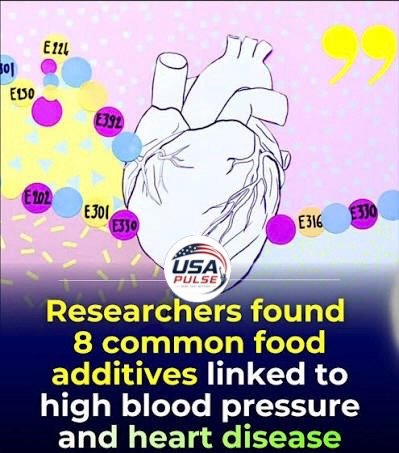
The research, published in the European Heart Journal, analyzed detailed dietary information from 112,395 participants in France who were followed for roughly seven to eight years.
8 Preservatives Researchers Identified
Researchers examined 17 commonly consumed preservatives and found that eight were associated with a higher risk of developing high blood pressure:
- Potassium sorbate (E202)
- Potassium metabisulphite (E224)
- Sodium nitrite (E250)
- Ascorbic acid (E300)
- Sodium ascorbate (E301)
- Sodium erythorbate (E316)
- Citric acid (E330)
- Rosemary extracts (E392)
Researchers also reported an association between higher intake of ascorbic acid used as an additive and cardiovascular disease.
What Did the Study Find?
Participants consuming the highest amounts of non-antioxidant preservatives had a 29% higher risk of hypertension and a 16% higher risk of cardiovascular disease compared with those consuming the lowest amounts.
Higher consumption of antioxidant preservatives was associated with a 22% higher risk of hypertension.
However, these numbers show associations — they do not prove that the preservatives themselves caused the health problems.
What Should Consumers Know?
Preservatives are widely used to prevent spoilage, control bacteria and mold, and maintain the color or freshness of processed foods.
Researchers said the findings support existing recommendations to favor minimally processed foods and reduce unnecessary exposure to additives.
More research will be needed to determine whether individual preservatives directly contribute to cardiovascular disease and to understand the biological mechanisms involved.
For now, the study provides another reason to pay attention not only to calories, sugar and fat — but also to what is listed in the ingredients.
Do you check food labels before buying processed foods?