Eggs are one of America’s most popular breakfast foods — but what actually happens when you eat them regularly?
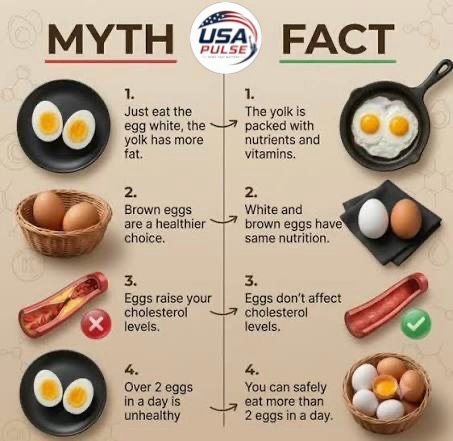
For most healthy people, eggs can be part of a balanced diet and provide an impressive amount of nutrition in a relatively small package.
🥚 A Nutrient-Dense Source of Protein
One large egg contains roughly 6 grams of protein along with important nutrients including vitamin B12, selenium, vitamin D and choline.
Protein can also help you feel satisfied after a meal, which is one reason eggs are commonly included in filling breakfasts.
🧠 Your Brain Gets Choline
Eggs are one of the better dietary sources of choline, an essential nutrient involved in brain and nervous-system function.
Your body produces some choline naturally, but food remains an important source.
💪 They Can Help Support Muscle
Because eggs contain high-quality protein with all nine essential amino acids, they can contribute to maintaining and repairing muscle when combined with an overall nutritious diet and regular physical activity.
👀 Eggs Contain Nutrients Important for Eye Health
Egg yolks contain lutein and zeaxanthin, two carotenoids that accumulate in the retina of the eye.
These nutrients are commonly studied for their role in maintaining eye health as people age.
❤️ But What About Cholesterol?
One large egg contains a significant amount of dietary cholesterol, almost entirely in the yolk.
However, dietary cholesterol does not affect everyone in exactly the same way.
For many healthy adults, eating eggs in moderation can fit into a heart-healthy eating pattern. The rest of your diet matters too — especially the amount of saturated fat, highly processed foods, vegetables, fruits, whole grains and other protein sources you consume.
People with high cholesterol, diabetes, cardiovascular disease or other medical conditions may have different dietary needs and should follow guidance from their healthcare professional.
🍳 How You Cook Them Matters
A boiled or poached egg is nutritionally different from a breakfast where eggs are combined with large amounts of butter, processed meat and highly refined carbohydrates.

Try pairing eggs with foods such as:
• Whole-grain toast
• Avocado
• Tomatoes and spinach
• Fresh fruit
• Beans or other vegetables
The Bottom Line
Eggs are inexpensive, versatile and packed with nutrients.
For many people, regularly eating eggs can be part of a healthy diet — but there is no single food that determines whether a diet is healthy.
What you eat alongside your eggs, and the overall pattern of your diet, matters much more.
USA Pulse Health brings you practical food and nutrition information you can actually use.