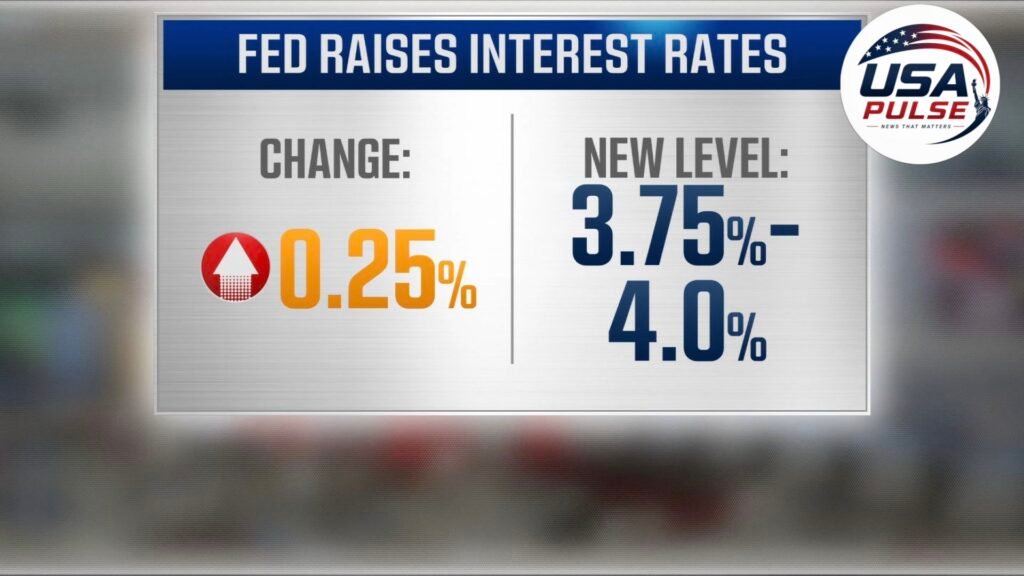
The Federal Reserve raised interest rates by a quarter percentage point on Wednesday, marking its first rate increase in more than three years as policymakers intensify their fight against persistent inflation.
The Federal Open Market Committee voted unanimously to increase the federal funds target range to 3.75%–4.00%.
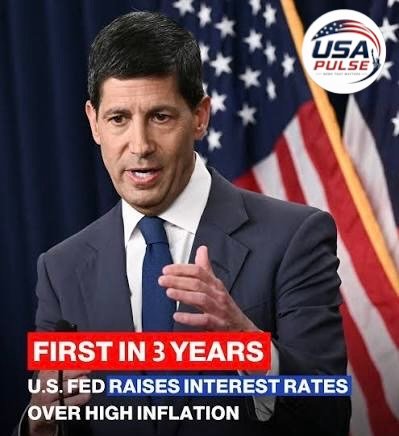
The decision represents a significant shift for U.S. monetary policy and comes as higher energy prices and continued geopolitical uncertainty create new inflation concerns.
In its official statement, the Federal Reserve said economic activity continues to expand at a solid pace. Domestic spending has remained resilient, productivity growth is strong and capital investment remains robust.
The labor market has also remained relatively stable, with job gains keeping pace with growth in the workforce and the unemployment rate changing little.
However, inflation remains the central concern.
Federal Reserve officials said Wednesday’s rate increase is intended to help bring inflation back toward the central bank’s long-term 2% target.
The impact of the decision could eventually be felt across American households.
Changes in Federal Reserve policy can influence borrowing costs throughout the economy, including credit cards, auto loans, business financing and some other forms of consumer credit.
Mortgage rates are not directly set by the Federal Reserve, but they can also be affected by broader movements in Treasury yields, inflation expectations and financial markets.
The Fed’s latest economic projections suggest policymakers may not be finished tightening monetary policy.
Most Federal Reserve officials currently project another rate increase before the end of 2026, although future decisions will depend on incoming economic data and the inflation outlook.
Wall Street reacted negatively following the announcement as investors considered the possibility that borrowing costs could remain elevated for longer.
The decision also arrives as energy prices have become an increasingly important inflation risk amid continued instability in the Middle East.
For American consumers, the central question is now how quickly inflation begins to cool — and whether additional Federal Reserve rate increases will be necessary.
The Fed has made its priority clear: inflation remains too high, and restoring price stability remains at the center of monetary policy.
USA Pulse will continue following Federal Reserve decisions and what they mean for American households, borrowers and financial markets.