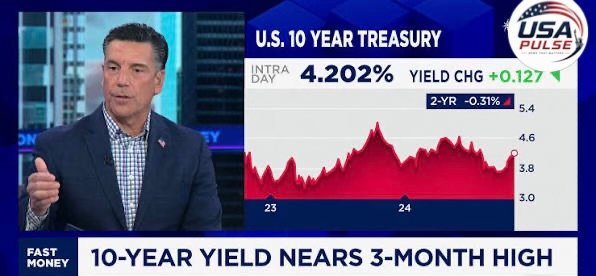
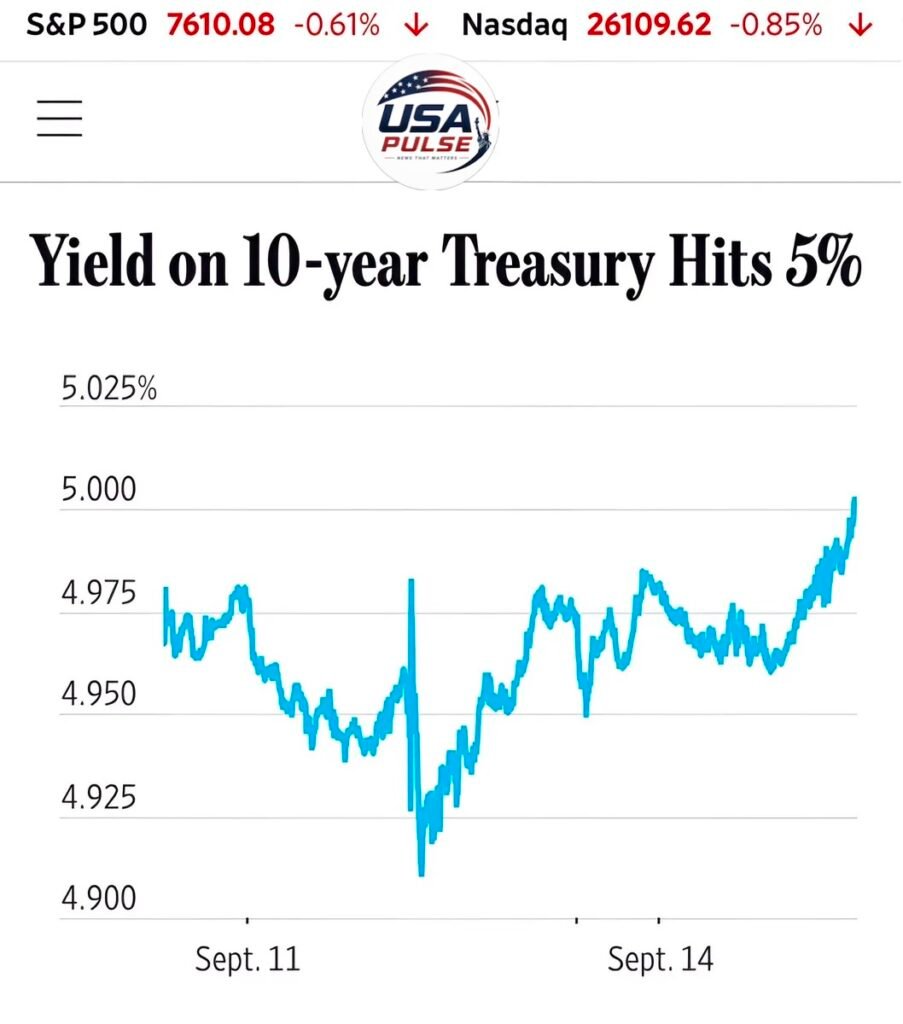
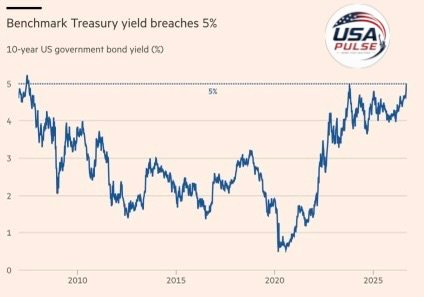
The yield on the benchmark 10-year U.S. Treasury note climbed above 5% on Monday, reaching the closely watched level for the first time since October 2023 and raising new concerns about borrowing costs for American households and businesses.
The 10-year Treasury yield reached approximately 5.01% as investors sold government bonds amid renewed concerns about inflation, rising oil prices and the future path of Federal Reserve interest rates.
The move matters far beyond Wall Street.
The 10-year Treasury yield is an important benchmark for borrowing costs throughout the U.S. economy. When Treasury yields rise, mortgage rates and other forms of credit can also face upward pressure.
That means Americans looking to buy a home, finance a vehicle or borrow money could continue facing expensive credit conditions.
One of the biggest factors behind the latest increase is inflation.
Rising energy prices have renewed concerns that inflation could remain above the Federal Reserve’s 2% target. Oil prices have surged amid continuing instability in the Middle East, increasing the risk of higher transportation and consumer costs.
Investors are also preparing for the Federal Reserve’s next interest-rate decision.
A Reuters poll of economists found that the Fed is widely expected to raise its benchmark interest rate by 0.25 percentage points at its September meeting, bringing the target range to 3.75%–4.00%.
Higher Treasury yields are also creating another challenge for Wall Street.
When government bonds offer investors higher returns, stocks can become relatively less attractive. U.S. markets finished Monday lower, with the S&P 500 falling around 0.5%, the Dow Jones Industrial Average declining about 0.3% and the Nasdaq Composite losing roughly 0.6%.
Oil added another layer of pressure. Brent crude settled at $105.68 per barrel after approaching $110 earlier in the session.
The combination of higher oil prices, persistent inflation and rising Treasury yields is now putting renewed attention on the cost of living and borrowing across America.
For homeowners and prospective buyers, the 5% Treasury milestone will be particularly important to watch because mortgage rates tend to track movements in longer-term Treasury yields.
Businesses and the federal government could also face higher financing costs if elevated yields persist.
The key question now is whether the 10-year Treasury yield remains around the 5% level — or moves even higher as investors react to inflation, oil prices and the Federal Reserve.
USA Pulse will continue following the latest developments and what they mean for American households and the economy.