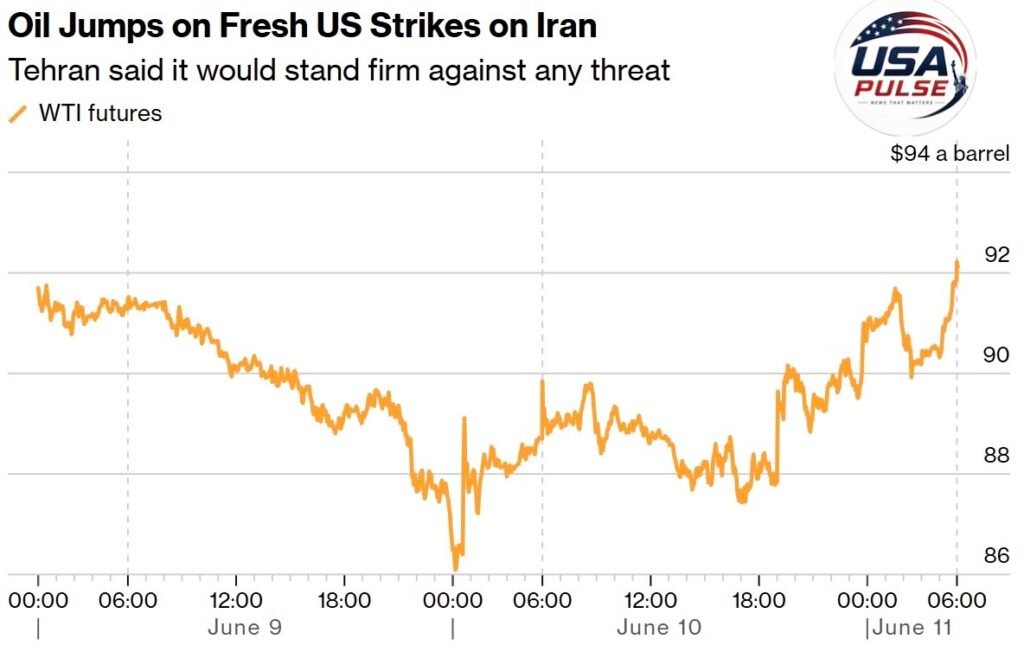
Oil prices surged again Monday as escalating attacks across the Middle East raised fresh concerns about global energy supplies and pushed fuel costs higher for American consumers.
Brent crude, the international benchmark, climbed to around $107.61 per barrel, after reaching an intraday high above $108.
U.S. West Texas Intermediate crude also jumped to approximately $102.53 per barrel.
The latest surge comes as attacks on Saudi Arabian energy infrastructure and shipping routes add new pressure to an oil market already disrupted by the ongoing U.S.-Iran conflict.
Saudi Oil Pipeline Hit
One of the biggest concerns is Saudi Arabia’s critical East-West Pipeline, which was damaged in a recent drone attack.
The roughly 745-mile pipeline is strategically important because it allows Saudi Arabia to move oil toward the Red Sea while avoiding the Strait of Hormuz.
It has the capacity to transport as much as 7 million barrels of oil per day.
According to officials cited by The Associated Press, repairs could take approximately three to five weeks, although parts of the pipeline may return to service earlier.
That possibility has increased fears that global oil supplies could remain under pressure for weeks.
Houthis Intensify Campaign
The crisis is also expanding around the Red Sea.
Iran-backed Houthi forces in Yemen have intensified military operations and gained territory near the Bab el-Mandeb Strait, another strategically important route for global shipping.
The combination of threats around both the Strait of Hormuz and Bab el-Mandeb is creating new uncertainty for oil traders, shipping companies and governments around the world.
American Drivers Feel the Impact
The effects are increasingly visible in the United States.
The average U.S. gasoline price has risen to around $4.32 per gallon, while diesel has climbed to approximately $6.23 per gallon.
Higher diesel prices are particularly important for the broader economy because trucks, agricultural machinery and other commercial equipment depend heavily on the fuel.
When transportation costs rise, businesses can face higher expenses moving food and consumer products across the country.
Those additional costs can eventually reach American households through higher prices.
Oil Markets React to Growing Supply Fears
Oil prices rose more than 3% during Monday’s trading as investors reacted to the latest developments.
Markets are increasingly concerned that the conflict could cause longer-lasting disruptions to Middle Eastern oil production and transportation.
The situation is particularly sensitive because Saudi Arabia is one of the world’s largest oil exporters.
At the same time, shipping through some of the region’s most important waterways has become more difficult and expensive.
Diplomatic Efforts Face Another Setback
There was also disappointing news on the diplomatic front.
A planned meeting involving Iran and Gulf countries to discuss shipping through the Strait of Hormuz was postponed.
That reduced hopes that a regional agreement could quickly ease pressure on oil transportation.
With military attacks continuing and diplomatic progress uncertain, traders are preparing for the possibility that elevated oil prices could continue.
What Happens Next?
The biggest question for Americans is how long crude oil remains above $100.
If oil prices stay elevated for an extended period, gasoline, diesel, transportation and other energy-related costs could remain high.
Further attacks on major pipelines, oil facilities or shipping routes could create even more volatility.
For now, American consumers and global markets are watching the Middle East closely as a rapidly changing conflict continues to influence prices thousands of miles away.