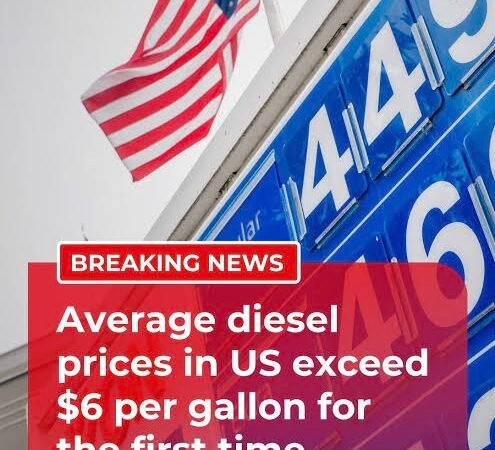
American drivers and businesses are facing another major surge in fuel costs as the conflict with Iran continues to disrupt global energy markets.
The average U.S. diesel price has climbed above $6 per gallon, according to fuel-price tracker GasBuddy, marking a new milestone as oil prices remain above $100 a barrel.
The increase comes as fighting in the Middle East threatens two of the world’s most important energy shipping routes — the Strait of Hormuz and the Red Sea.
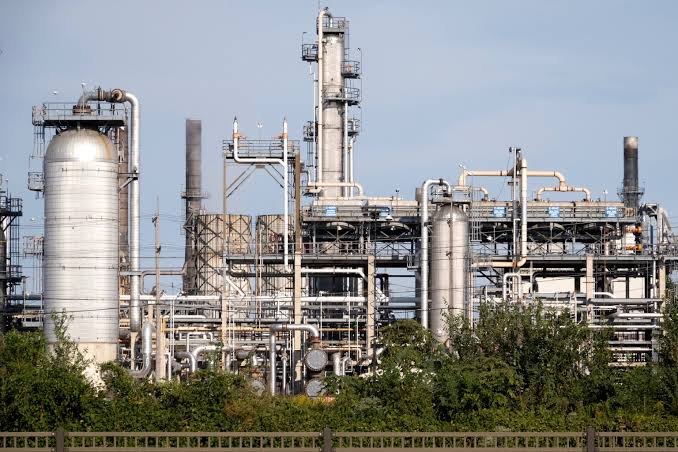
Oil Prices Remain Above $100
Brent crude traded around $106 per barrel on Friday, while U.S. West Texas Intermediate crude was around $101.
Both benchmarks were on track to finish the week above $100 per barrel for the first time in months.
The sharp increase reflects growing fears that the conflict could keep significant amounts of Middle Eastern oil away from global markets.
Strait of Hormuz Remains Under Pressure
The Strait of Hormuz remains at the center of the crisis.
The strategic waterway normally handles a major share of the world’s oil and liquefied natural gas shipments, making disruptions there particularly important for global energy prices.
Recent U.S.–Iran military exchanges involving oil tankers and shipping have intensified concerns about how quickly normal traffic can return.
Red Sea Adds Another Risk
Energy markets are also watching developments around the Red Sea after Iran-aligned Houthi forces expanded their position around Yemen’s western coast.
Any serious disruption around the Bab el-Mandeb Strait could put additional pressure on shipping between Asia, the Middle East and Europe.

That means global energy markets are now facing risks around two critical maritime chokepoints at the same time.
Why This Matters for Americans
Higher diesel prices can affect much more than drivers filling up their vehicles.
Trucks transport a huge share of goods across the United States, meaning higher fuel costs can increase transportation expenses for businesses and eventually contribute to higher prices for food and other consumer products.
Persistently high oil prices could also complicate the broader U.S. inflation outlook.
The direction of fuel prices will now depend heavily on how long the conflict continues and whether major Middle Eastern energy routes can return to normal operations.
For American consumers, the economic consequences of the U.S.–Iran conflict are becoming increasingly difficult to ignore.