Iran says it plans to establish a new maritime exclusion zone near the Strait of Hormuz, raising fresh concerns about global shipping and energy supplies as tensions with the United States continue to escalate.
Mohsen Rezaei, the head of Iran’s Supreme National Security Council, said the proposed zone would stretch from the area of the U.S. naval blockade toward the Strait of Hormuz and into the Persian Gulf.
Iran says vessels entering the restricted area while attempting to transit the strait could be identified and placed on a sanctions list.
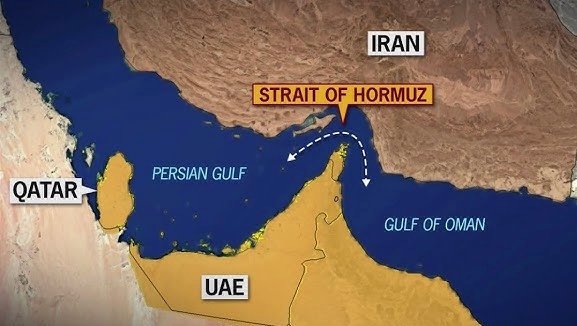
The announcement comes after another dangerous round of confrontation between U.S. and Iranian forces in and around one of the world’s most important energy corridors.
U.S. and Iran Exchange New Threats
The latest escalation follows U.S. strikes on three Iranian oil tankers after the U.S. military said Iranian ballistic missiles had targeted American Navy warships.
Two of the Iranian oil carriers were permanently disabled and a third was destroyed, according to the U.S. military.
Iran subsequently warned that additional attacks against its assets could trigger further retaliation.
Iranian Parliament Speaker Mohammad Bagher Ghalibaf said Monday that energy infrastructure across the Gulf — including American oil and gas interests — could be vulnerable if Iranian assets are attacked again.
The United States maintains that the Strait of Hormuz is an international waterway and has been using naval forces in the region to protect shipping and enforce pressure on Iranian oil exports.
Why the Strait of Hormuz Matters
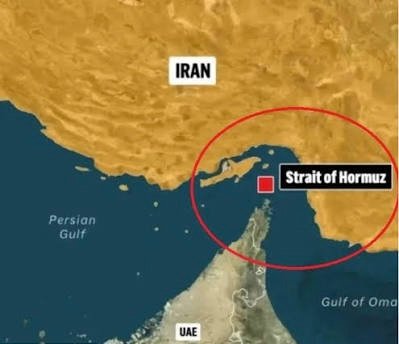
The Strait of Hormuz is one of the most strategically important waterways in the world.
Millions of barrels of oil normally move through the narrow passage every day, connecting major Gulf energy producers with global markets.
Any prolonged disruption could affect oil supplies far beyond the Middle East and potentially raise fuel and transportation costs for American consumers.
Shipping through the region has already been severely disrupted as the U.S.–Iran confrontation intensifies.
Iran has also said it is preparing new shipping routes through Iranian and Omani waters, with additional details expected in the coming days.
Oil Prices Move Closer to $100
Energy markets are already reacting to the renewed fighting.
Brent crude climbed to a six-week high on Monday, reaching as much as $97.93 per barrel before trading around $97 later in the day.
U.S. West Texas Intermediate crude was trading above $92 per barrel.
The latest gains followed a sharp increase last week as U.S.–Iran attacks resumed after a period of relative calm.
The possibility of additional restrictions around the Strait of Hormuz could keep pressure on oil markets if traders believe supplies from the Gulf are at greater risk.
What Happens Next?
Much will depend on how Iran implements its proposed exclusion zone and how the United States responds.
The exact boundaries and enforcement mechanisms have not yet been fully detailed.
Any attempt to restrict international vessels near the Strait of Hormuz could create another major flashpoint between Tehran and Washington.
With U.S. and Iranian forces already exchanging attacks and oil prices approaching $100 per barrel, the situation around the Strait of Hormuz remains one of the most closely watched developments in the global economy and the Middle East.
USA Pulse will continue following the latest developments.