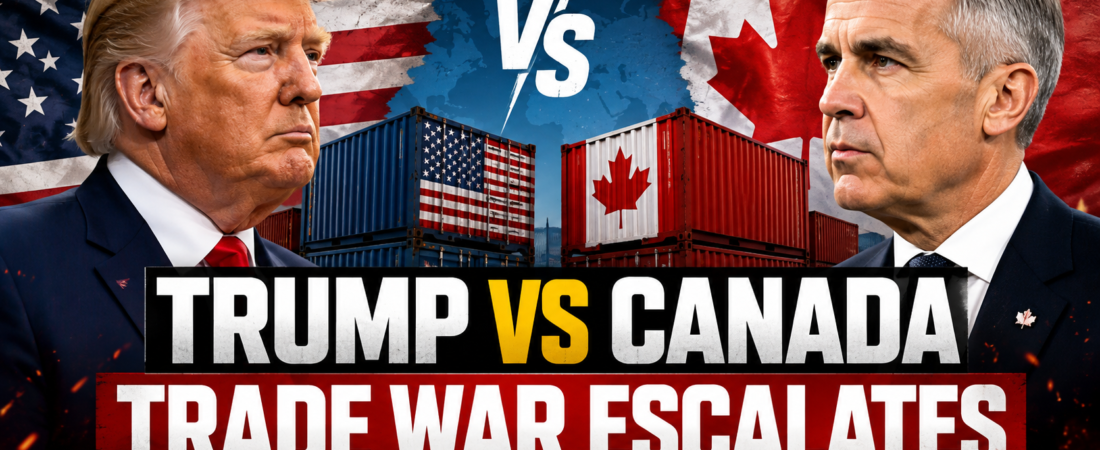
President Donald Trump sharply escalated his trade confrontation with Canada on Wednesday, declaring that it was “time to teach Canada” after negotiations between the two longtime allies collapsed.
The latest development marks another major deterioration in U.S.-Canada relations as both countries impose steep tariffs and prepare for the possibility of a prolonged trade dispute.
U.S. Imposes 50% Tariffs
The United States imposed new 50% tariffs on approximately $20 billion worth of Canadian imports after Washington and Ottawa failed to finalize a trade agreement.

The measures add further pressure to an already strained relationship between the two neighboring countries.
Trump said the United States could obtain products it needs from other countries if necessary and strongly criticized Canada’s decision to reject the proposed agreement.
Canada Strikes Back
Canada has responded with its own retaliatory tariffs covering approximately $20 billion worth of annual U.S. imports.
The Canadian measures are scheduled to take effect on September 8 and will target hundreds of American products, including goods from the steel, dairy, agricultural equipment, electronics and appliance sectors.
Canada has also announced billions of dollars in financial assistance designed to support businesses and workers affected by the growing trade dispute.
Auto Industry Could Be Next
The confrontation could become even more significant for the North American automotive industry.
Trump has announced plans for 50% tariffs on Canadian automobiles and auto parts beginning January 1.
The U.S. and Canadian automotive industries are deeply connected, with vehicles and components frequently crossing the border during production. Higher tariffs could therefore create new challenges for manufacturers and potentially increase costs.
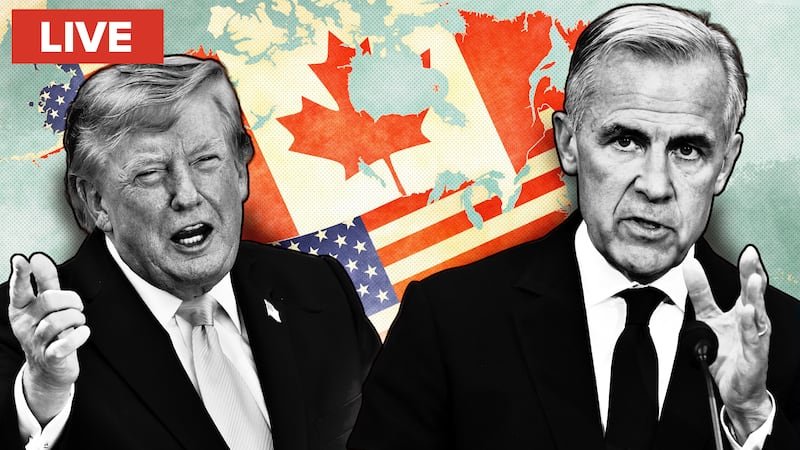
One of America’s Biggest Trading Relationships at Risk
The stakes extend far beyond individual products.
Annual trade between the United States and Canada is worth hundreds of billions of dollars, while Canada remains an important supplier of energy, aluminum, auto parts and other critical products to the American economy.
With neither Washington nor Ottawa currently backing down, attention is now turning to whether negotiations can restart before Canada’s retaliatory measures take effect.
The coming weeks could determine whether the two longtime allies find a compromise — or move deeper into a major North American trade war.